

About this same time last year during Spring Break was when I went to Joshua Tree on crutches because I tore my calf on a biking accident right before our camping trip. You can read about it here.
This year we went to Joshua Tree again, but this time, I was free of crutches! Yay!
Hope, growth, and a desert full of wildflowers
During this camping trip, my favorite thing was to try to find as many wildflowers as I could on our walks. Since I couldn’t walk much last time, I thoroughly enjoyed hiking with the kids, identifying the wildflowers on our way. (Even though my son was a bit impatient with me because he said I slowed them down each time I took pictures.)
What is most healing about nature is the quiet that it brings to the heart and the mind. Being with family and hearing my kids laugh and play amongst the Joshua trees and the rocks was soothing for the soul.
Because I was looking more intently, there were a lot more wildflowers I saw this year than last. It was interesting to note how my perspective can change depending on the situation. If I look hard enough there is always something new to discover, something to learn. Staying close to nature can teach us many things.
I started to wonder and reflect on how these beautiful wildflowers are able to exist in the desert. Did you know that there are at least 350 - 400 species of wildflowers in Joshua Tree? I learned that they survived harsh conditions by reserving water through the heavy rains, growing deep taproots or wide shallow roots, and adapting to their environment. Some of these seeds survive for decades in the soil, waiting for the perfect conditions to bloom. They have learned special ways to survive like the waxy coatings to reduce evaporation or the thick stems or roots to store water. They also form symbiotic relationships relying on specific insects for pollination.
We can learn so much about ourselves through observation of nature. How we too can survive even the harshest of conditions, how to adapt, become resilient and thrive.
Like the wildflowers, let us learn to plant our roots deep, reserve our water in bottomless wells during the heavy rains, and stay resilient, trust that the perfect conditions will soon give rise to the wildflowers within us.

A handful of wildflower photos from my walks—sharing them with you...
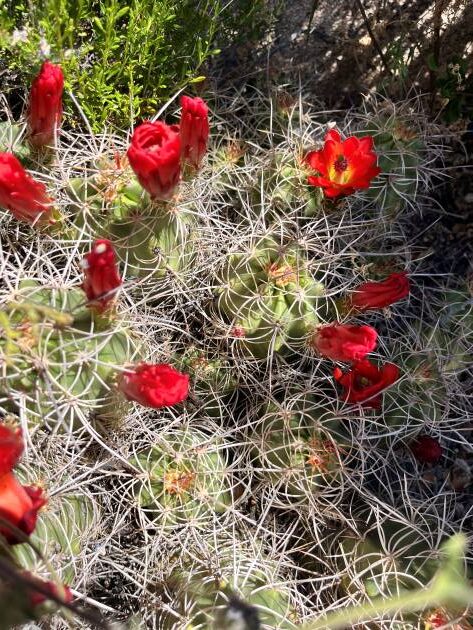
Mojave Mound Cactus - Echinocereus mojavensis
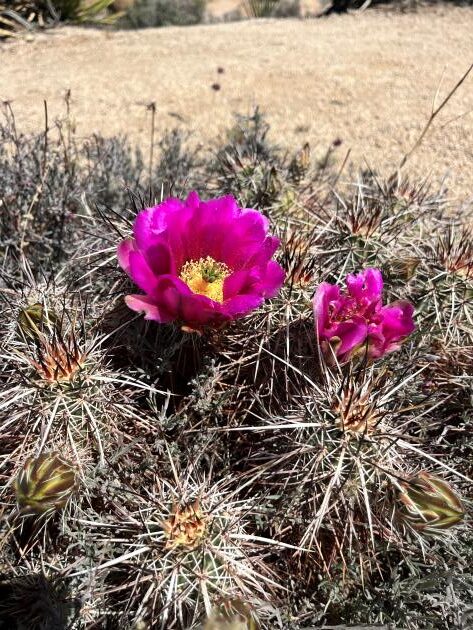
Hedgehog Cactus - Echinocereus engelmannii
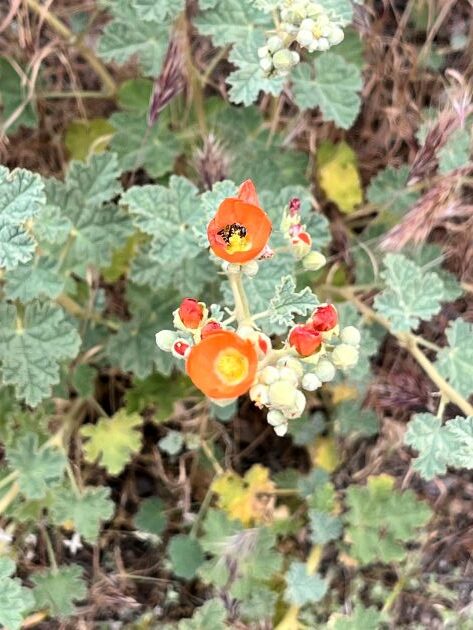
Apricot Mallow - Sphaeralcea ambigua
Crushed leaves used by Native Americans as medicinal salve.
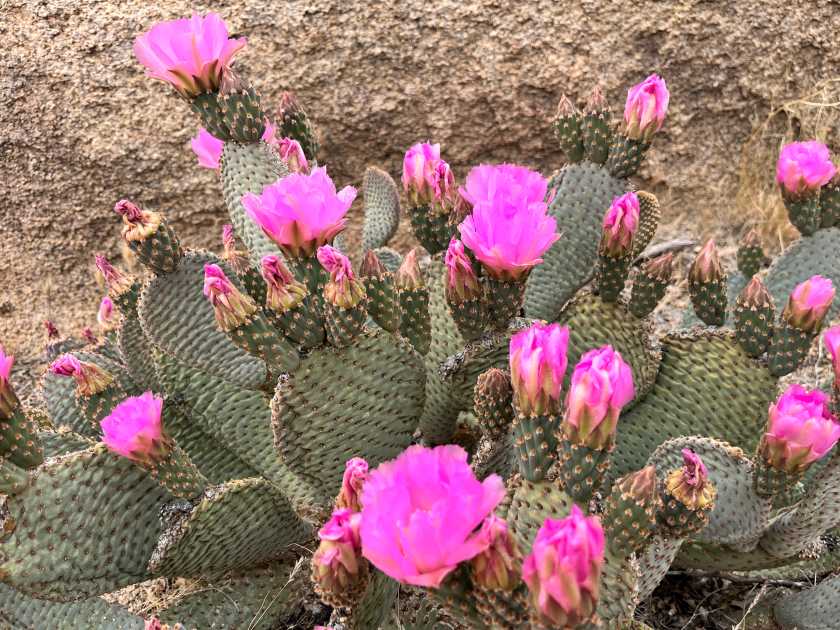
Hope returns—quietly, like wildflowers in the desert.
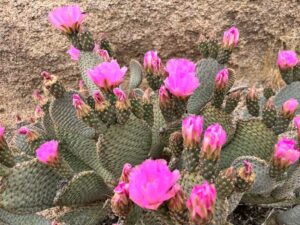
Beavertail Cactus - Opuntia basilaris
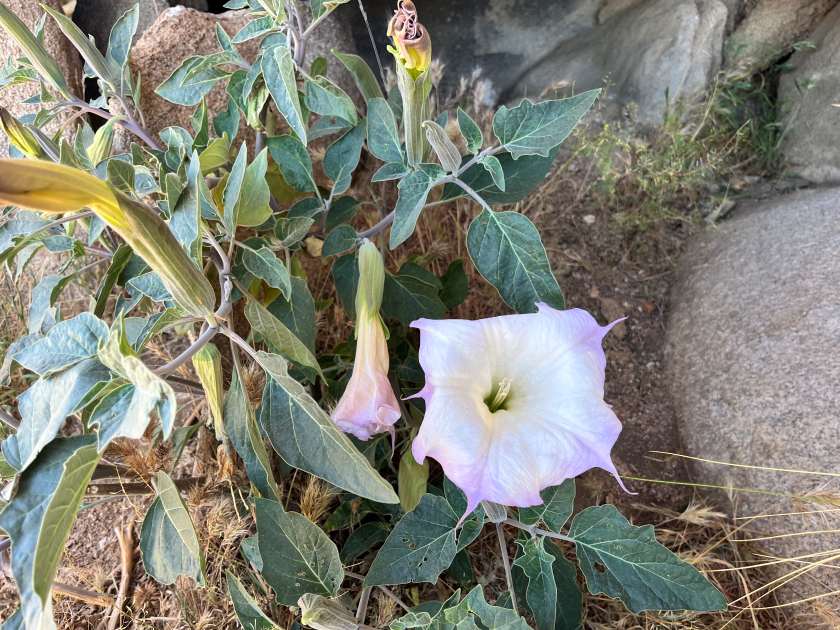
Jimson Weed - Datura wrightii
Highly toxic! Implicated in human deaths! (Not all flowers are the same so it's just as important to know what to avoid).
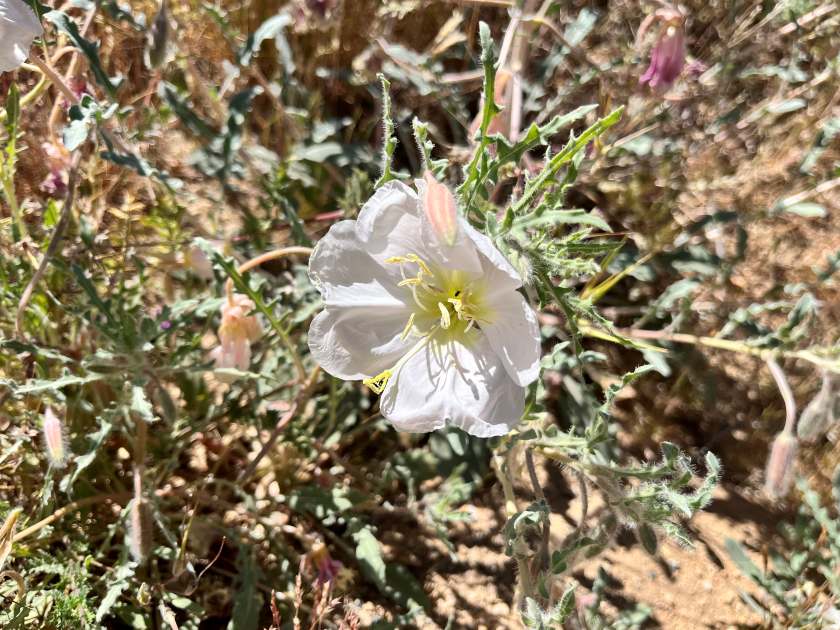
Evening Primrose
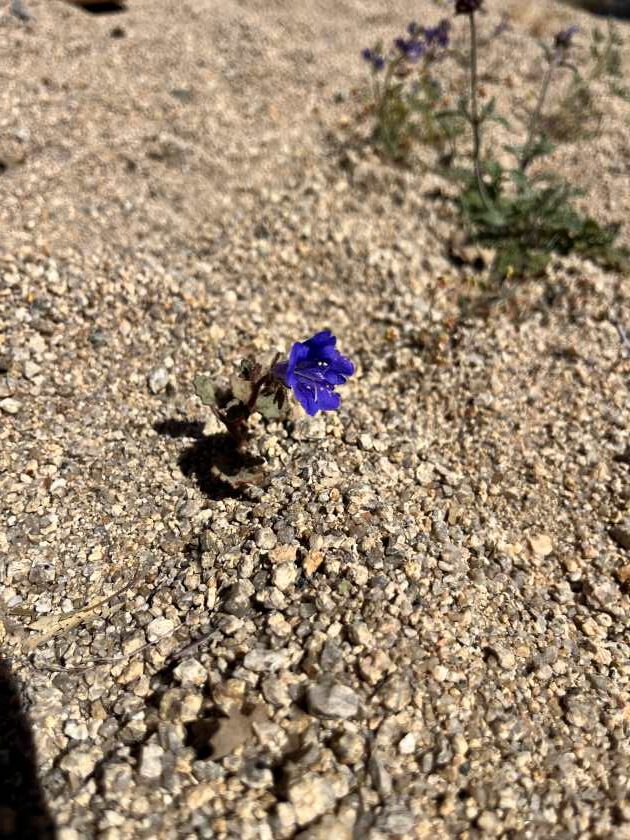
Desert Bluebells - Phacelia campanularia
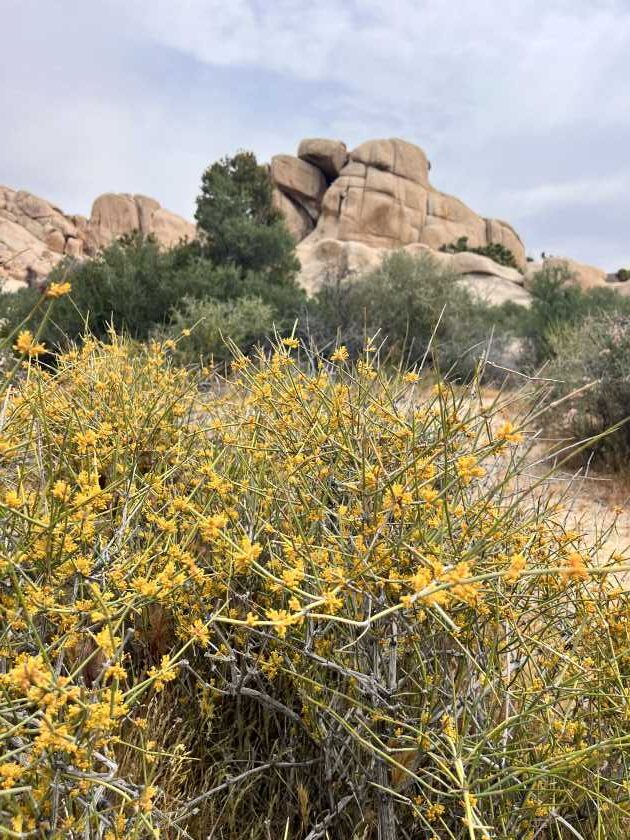
Mormon Tea - Genus Ephedra
My favorite book that accompanied my walks to identify the wildflowers was: Wildflowers of Joshua Tree National Park by James W. Cornett