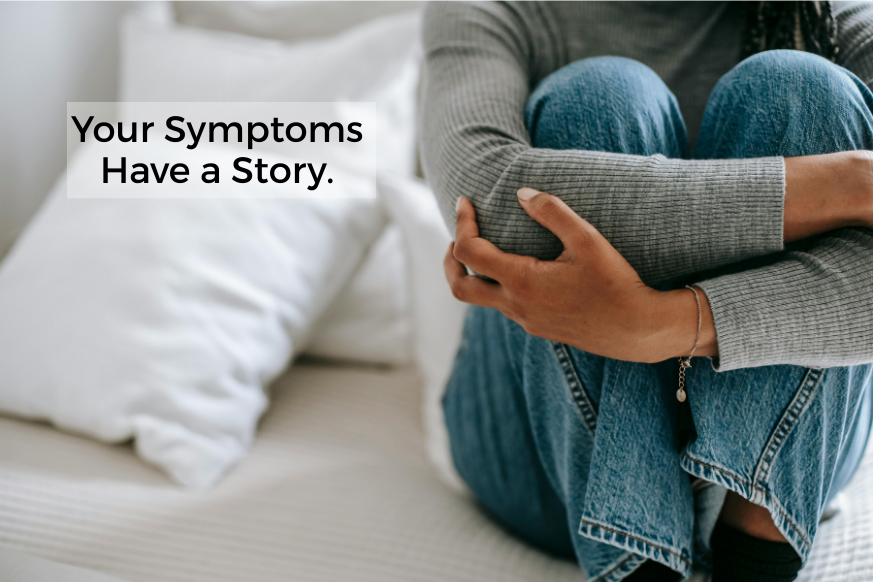


There is a lot happening in the world right now. For many of us—especially immigrants, people of color, and those connected to targeted communities—what’s happening isn’t abstract or distant. It lives in our nervous systems. It shows up as exhaustion, vigilance, grief, anger, numbness, and a deep sense of uncertainty about what comes next.
In times like these, conversations about self‑care and trauma‑informed care can feel either essential—or painfully insufficient—depending on how they’re framed. This is an invitation to talk about them in a way that is grounded, honest, and collective.
When the World Feels Unsafe, the Body Notices
Trauma‑informed care starts with a simple but profound understanding that our bodies respond to what we live through.
Racialized violence, anti‑immigrant policies, surveillance, family separation, economic precarity, and constant exposure to harm along with the constant barrage of news and social media don’t just affect us emotionally or politically. They affect our sleep, digestion, immune systems, pain levels, energy, and capacity to cope.
If you feel more tired than usual. If your body feels tense, heavy, or on edge. If focusing feels harder or rest feels out of reach—they may be responses to prolonged stress and threat.
Trauma‑informed care asks us to begin asking, “What has my body been carrying?”
Self‑Care can be a Lifeline for Resilience
In times of collective stress and uncertainty, self‑care can bring up mixed feelings. For some, it feels essential. For others, it can feel hollow, oversimplified, or out of touch with the realities people are navigating.
Trauma‑informed care invites us to hold this complexity.
Self‑care is not a one‑size‑fits‑all solution, and not all forms of care are equally accessible, effective, or supportive for every body. Context matters. Lived experience matters. The weight carried by different communities is not the same—even when the language of “wellness” tries to flatten it.
And still, caring for ourselves—and being supported by others—is an essential part of building resilience.
Trauma‑informed self‑care is not about bypassing harm or pretending things are okay. It’s about tending to the nervous system so it has enough capacity to endure, adapt, and respond. It’s about creating moments of steadiness in bodies that are often asked to carry more than their share.
Sometimes that looks like:
- Choosing rest without needing to justify it
- Letting your body move gently instead of pushing through
- Limiting exposure to constant distress without disconnecting from what matters
- Allowing emotions to surface without immediately needing to resolve them
This kind of care is not performative or indulgent. It is a necessary practice of sustaining ourselves—especially in times that demand so much.
You Are Not Meant to Hold This Alone
Often the burden of survival is placed onto individuals while systems remain unchanged.
One of the quiet harms of trauma—especially in marginalized communities—is isolation.
Many of us were taught to be strong, to endure, to not ask for help. Others have learned through experience that support systems can be unsafe, inaccessible, or harmful.
Trauma‑informed care reminds us that healing and resilience are relational.
Getting support might look like:
- Reaching out to trusted friends or community members
- Working with practitioners who understand trauma, culture, and context
- Seeking care that honors your lived experience rather than minimizing it
- Finding spaces—formal or informal—where you don’t have to explain why this hurts
Support is a recognition that what we are facing is bigger than any one body.
Care as a Collective Practice
For communities that have survived generations of displacement, colonization, and violence, care has always been collective.
Sharing food. Watching each other’s children. Creating ritual. Telling the truth. Making space for rest and remembrance. Protecting joy even in the midst of struggle.
Trauma‑informed care asks us to remember that we are shaped by our histories, but we are also shaped by how we care for one another now.
In turbulent times, care is not passive. It is an act of resistance.
Moving Forward, Gently
If you are feeling overwhelmed right now, you are not imagining it. If your body feels different, slower, more reactive, or more tired than it used to—there is a reason.
You deserve care that understands the full context of your life.
You deserve support that does not ask you to be less affected.
You deserve practices that help you stay connected to yourself and your community.
We are living through a lot. Let’s meet this moment with honesty, compassion, and care that is deep enough to hold it.
If you need support, please know that reaching out—to a trusted person, a community space, or a trauma‑informed practitioner—is a meaningful step, not a failing.
I care deeply about building spaces of steady, compassionate community—and I would love for you to be part of it. The best way to stay connected and receive free resources, workshops, and offerings is to sign up for my newsletter.